At Dreamforce 2026, Salesforce and NVIDIA announced Koa, Salesforce's first CRM reasoning model, with NVIDIA CEO Jensen Huang joining Marc Benioff on stage for the reveal. As Huang put it: "Now we can know everything and do anything."
What Koa Actually Is
Koa is built by post-training NVIDIA's Nemotron 3 Super on a proprietary synthetic dataset modeled on nearly three decades of Salesforce CRM deployments, spanning more than 14 industries. Each training scenario pairs a persona with a sequence of actions and tool calls, teaching the model how a deal actually moves through a pipeline, how a service case gets routed, or how a follow-up gets scheduled, not just how to describe those things in a chat.
Two details matter for anyone evaluating it. First, no customer data was used to train Koa; the training scenarios are synthetic, built to reflect the kinds of tasks Agentforce agents handle. Second, Salesforce controls the model weights and runs both training and inference inside its own infrastructure, so customer data doesn't cross that trust boundary at inference time either.
Why a CRM-Specific Model, Not Just Claude or ChatGPT
Koa isn't replacing the general-purpose models already inside Agentforce. Salesforce's own framing is that Koa handles CRM-specific reasoning (updating an opportunity, routing a case, scheduling a follow-up) while a model like Claude, available through Claudeforce, handles broader requests. On Salesforce's own CRM benchmark, the company reports Koa matching or exceeding leading model performance on CRM actions with three times fewer errors. Worth flagging: that's a vendor-run benchmark, not an independent one, so treat the specific multiple as a claim to verify against your own use cases rather than a settled fact.
The Real Story Is the Data Underneath It
Strip away the model architecture, and Koa's actual pitch is a familiar one to us: a reasoning model is only as good as the operational knowledge it's grounded in. Salesforce didn't fine-tune Koa on generic internet text; they built a synthetic dataset specifically modeled on how CRM data behaves in practice. That's the same principle behind every Data 360 project we run. An agent, whether it's Koa or anything else, can only reason well about your business if the underlying data (customer records, order history, case history) is unified, current, and trustworthy in the first place. Model quality gets the headlines; data quality is what actually determines whether any of it works in production.
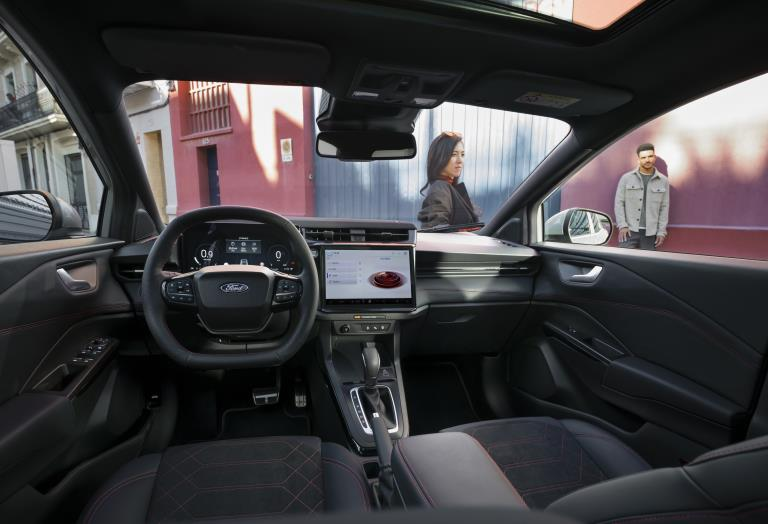
We've built exactly this foundation before. For Ford Otosan, we designed and delivered a Salesforce architecture built around Data 360: unifying customer data, building advanced segmentation, and enabling real-time activation across Marketing Cloud to create a single, trustworthy view of the customer. That's the same groundwork Koa depends on to reason well, whether the model doing the reasoning is Salesforce's own or someone else's.